Thursday, 4 August 2022

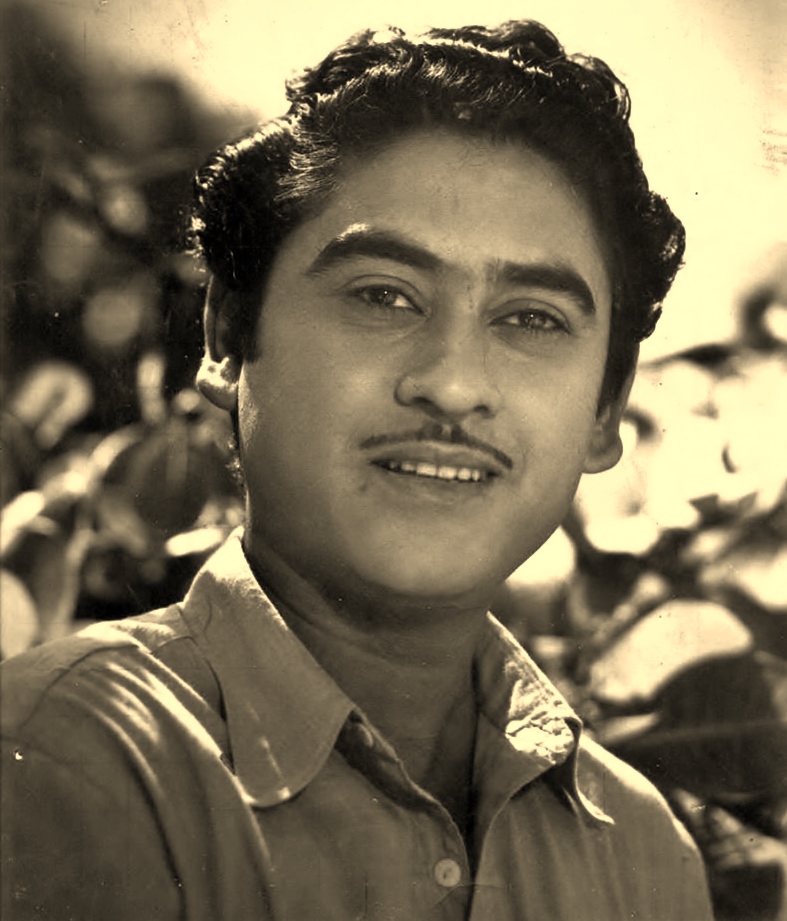
A mellow Bengali song of Kishore Kumar


When Kishore Kumar released an LP of 12 Rabindrasangeet-s (in 1981), the record elicited mixed reactions. The purists felt that his enunciation of the words & his asserive throw of voice were a bit unsuitable for the style of rendering a Rabindrasangeet.


On the other hand, his fans, who liked the way he sang his Hindi & Bengali (both film & non film) songs, argued that Kishore Kumar was never a conformist. He charted new paths with his unconventional & spontaneous gayaki... and his bouquet of Rabindrasangeet-s was jus that.

These fans were not just ordinary fans. It included a certain movie director, Satyajit Ray, for whom Kishore Kumar sang a Rabindrasangeet for his globally acclaimed movie, Charulata (1964).

The western melodic progression of this tune, suited Kishore Kumar's style nicely (as did the ebullient on-screen persona of Soumitra Chatterjee)

Song: aami chini go chini tomaare (Charulata - 1964)


A year later, he sang a Rabindrasangeet as the title song of the movie, Ektuku Chhoaan Laage' (1965). The music director was Hemanta Mukherjee, who must have provided some valuable inputs to the singer. Kishore Kumar rendered this melodious, Pilu-based song, very very capably. He even managed to pay a quick tribute to his idol Kundanlal Saigal, by applying a gentle khaTka on the word 'laage' in the same way as Saigal did in his popular recording of the early 40-s.

Song: ektuku chhoaan laage (Title Song -1965)


K L Saigal's version (Movie: Parichay - 1941):


Kishore Kumar sang this song again, in the 80-s, in the set of songs, referred at the start of this post. For those set of songs too, it was Hemanta Mukherjee, who mentored Kishore Kumar. (These songs are easily available on YouTube)


Now for Kishore Kumar's very first Rabindrasangeet. This was released in 1958, for his self-produced Bengali movie, Lookochuri (with him playing a double role). This duet with Ruma Guha-Thakurta (his first wife and Amit Kumar's mother), is based on a blend of Bihag & Kalyan (something that Tagore was quite fond of) & showcases the mellow diction of Kishore Kumar.

Song: maayabono-bihaarini horini (Lukochuri -1958)


Once again, Hemanta Mukherjee, the music director Lukochuri, must have guided him appropriately.


Finally, after references of several Rabindrasangeet-s & Hemanta Mukherjee's name, I would like to dwell on the song of my choice.


This is not a Rabindrasangeet but a composition of Hemanta Mukherjee, who, as a legendary vocal exponent of this genre of songs, was an amazingly talented composer too. It is a song from the same movie as the last example (Lukochuri - 1958) & with the same co-singer (Ruma Guhathakurka).

The composition has a distinct touch of Rabindrasangeet.

Personally, it is this tonal quality of Kishore Kumar (during the cusp of the 50-s & 60-s)  which is very close to my heart. It had the perfect mix of melody, lilt, pliancy & robustness.

Fans of Kishore Kumar deserved to have heard many more songs of this period (during which he was professionally de-focussed due to personal reasons).

This dulcet duet (an 'indoor song' in the movie) gently travels through the notes which are mostly in the first segment of the mid-octave. Kishore Kumar's resplendent rendition (that displays a beautiful vibrato in his voice as he holds on to the long notes) makes it an utter favourite of mine. He also negotiates the few low notes (down to the pancham of the mandra-saptak) with grace & aplomb.

Song: ei to hethaay kunjochhaayay
Artists: Kishore Kumar & Ruma Guhathakurta
Movie: Lukochuri (Bengali) (1958)
Music: Hemanta Mukherjee
Lyrics: Gauriprasanna Majumdar


The song's video (it has some gaps & jumps)


A tribute to Kishore Kumar on his 93rd birthday.


---------------------------------------------------------------------


.

----------------------------------------------------------------------

Sunday, 31 July 2022

A song of Mohammad Rafi


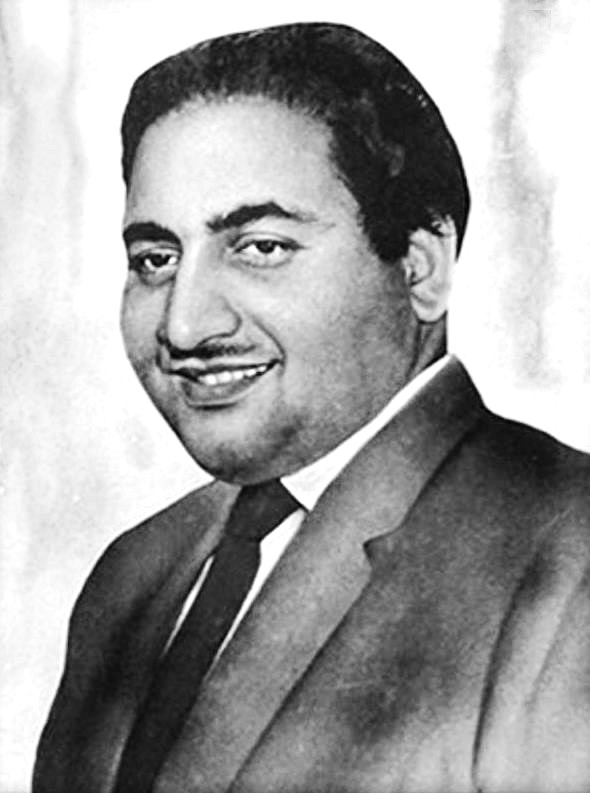
Mohammad Rafi was a genteel person. Every musician, researcher, film-personality, whom I've had the privilege of meeting, says the same thing.

Every photo of this singer shows him smiling shyly. Every video-footage of his reveals a body-language of unobtrusiveness. Every sound-byte of his (there aren't many) makes the listener infer that he was exceedingly unassuming... almost to a fault.

Often, singer's 'gayaki' is a reflection of his/her personality. When Mohammad Rafi croons in some songs, one can correlate the self-effacing enunciation with his personality (just as Talat Mahmoods's soft style of singing mirrored his elegant Lakhnavi tehzeeb).

There are, however, songs in which Mohammad Rafi's vocal throw has such a beautiful blend of tunefulness & assertion, that it takes one's breath away... and makes one marvel at the magical transformation from the shy & reticent personality to a 'champion' in front of the microphone.

I had the privilege of meeting Shailendra Singh at a friend's place (the music enthusiast, Anand Desai). In that relaxed ambience, he had a similar story to narrate.

"Rafi-saab was standing about six feet away from Asha-ji & me & was singing into his microphone. On several occasions I had to turn my head to check if Rafi-saab was singing, because he was barely audible.

Then, as we gathered around the console to hear the final output of 'teri rab ne banaa do jodi'  (the boisterous dance song from Suhaag), Rafi-saab's voice wafted across, rich & clear. itnaa soft-spoken insaan... aur aisi zordaar gayaki!..."

Shailendra Singh' admiration was for a recording during a period when Mohammad Rafi's  singing abilities were not at par with his luminiscent form of the mid 50-s to the mid 60-s (my favourite phase of his career).

Here is a song of Mohammad Rafi from a movie of 1965 to underline my viewpoint. (The tonal quality indicates that the song may have been recorded a few years earlier).

The melody has phrases of Raag Hameer. Since this raag is uttaraang-pradhaan (i.e, most of its notes dwell in the upper half of the octave), the singer has to ensure that the voice does not appear strained due the sustained use of high notes. Mohammad Rafi's rendition is amazingly restrained & yet carries that magical punch which impresses the listener from the very first note.

As the song progresses into the antara, the melody reposes on the upper tonic (the 'sa' of the upper register). Then, for the cross-over line, it touches the upper gandhar ('ga') and eases back in the mukhda with Mohammad Rafi effortlessly transitioning into his silken timbre.

A brilliantly executed song. Small wonder that a technically accomplished singer like Manna Dey thought so highly of his atristry.

The composers, Lala-Assar-Sattar were probably the first music director triumvirate of the industry. (Lala Gangawane, Assar Mohammad Khan and Sattar Khan). Lala & Sattar were musicians while Assar was an assistant to some composers.

As in several other songs, Mohammad Rafi's innate benevolence was always evident when he sang for rookie composers.

Song: main to tere haseen khayaalon mein
Movie: Sangram (1965)
Music: Lala-Assar-Sattar
Lyrics: Aish Kanwal


This note is a humble tribute to this seminal singer on his 42nd punyatithi...

-----------------------------------------------------------------------------
P.S. I have used the phrase 'shy & reticent personality' for this singer. Here is a short video-clip to substantiate my hunch. :)

The clip starts with composer O.P. Nayyar crafting the song 'mohabbat ka haat jawaani ka palla' with lyricist Qamar Jalalabadi. Then the singers, Mohammad Rafi and Asha Bhosle are rehearsing.

The video cuts to another song-recording. Probably the 'final take' of 'aaye hai door se' (Tumsa Nahin Dekha), with the same combination of composer and singers. (Lyrics by Majrooh Sultanpuri in this song)

In both the situations, Mohd. Rafi's body-language is the epitome of affability. :)


 ----------------------------------------------------------------------------------

Wednesday, 27 July 2022

On Nirmalendu Chowdhury (and some Bengali folk / folk-based songs)


Ustad Vilayat Khan's fine biography, by Namita Devidayal, has a very interesting anecdote.


The anecdote is about the legendary folk singer of Bengal, Nirmalendu Chowdhury.

[Quote]

In 1955 Pandit Jawaharlal Nehru, the Prime Minister of India, visited Russia, and an Indian Cultural delegation accompanied him where Ustad Vilayat Khan was a member. Since then many years passed. Sometime during 1990s Khan Sahib called his friend in Kolkata and asked about a song which he heard in Russia in 1955, a song sung by an Indian folk singer, who was none other than Nirmaendu Chowdhury.

"As the lights dimmed in the grand Bolshoi Theatre in Moscow, and the Russian sopranos’ voices soared divinely, the young Vilayat Khan started worrying about how the Indian performers could match this beauty. That was when one of the delegates, a Bengali folk singer called Nirmalendu Chowdhury, went on stage and sang the startlingly beautiful song that Khansahib was now haunted by.

Like many magical memories that get eroded in the flow of life, the words of the song had gone. What remained was the emotion. Now, so many years later, he wanted to sing the song. The folk singer had long since died, but his son Utpalendu Chowdhury was singing the same songs. Jayanta-da managed to get in touch with him. He called him that very day and said that Vilayat Khan wanted to meet him. The surprised singer agreed to come across...

The folk singer arrived in the morning. Vilayat spoke to him about the cultural delegation to Moscow and the lovely time he had with his father. Then he got straight to the point. He brought up the boat and the trees and hummed the tune.

‘Can you teach it to me?’

Utpalendu looked aghast. ‘Sure,’ he mumbled...

Vilayat Khan sat on the floor next to him.

‘What are you doing, Khansahib? You can’t sit there. Please sit on the couch.’

‘No, I am fine here. Today, I am the student and you are the teacher.’

Utpalendu smiled. He shut his eyes and sweetly sang the song for Vilayat Khan. Khansahib smiled as well as he wrote the words on a piece of paper in Urdu. About a month later, Vilayat Khan was performing at the Ramakrishna Mission outside Calcutta. He announced, ‘I want you to hear this folk tune which I had heard Nirmalendu Chowdhury sing many many years ago. It is an ode to all the boatmen who drift along the rivers of Bengal ...’.

He sang it beautifully, and the audience found themselves immersed in all the beauty and sadness of their land...

[Unquote] [The passage is a bit more elaborate & has been truncated to focus on the essence of the topic]

Here is the song. It was commercially recorded by Nirmalendu Chowdhury, later, in 1965 (not in good sound fidelity, though].

His sonorous voice seems to emanate from the very depths of the mystic rivers of Bengal.


The term Bhaatiyali comes from the term bhaaTa or low tide. The songs are serene & philosophical in nature beacuse the boat drifts slowly & the idle boatman mulls over (his) life.

Nirmalendu Chowdhury's voice also displayed a majestic joie de vivre, in brisk boatman-songs as well. Here is one such example.


Outside of Bengal, admirers of Salil Chowdhury, know him as a composer who had a strong fondness for western music. However, he was an avid lover of folk music too, as his involvements with IPTA & Youth Choirs (of Bombay and Calcutta) indicate.

Salil Chowdhury was a close friend & admirer of Nirmalendu Chowdhury and had used his compelling vocals in the critically acclaimed Bengali movie, Ganga (1960).


This type of a brisk boat-song is called 'saari' & is sung when all the oarsmen are rowing in unision across a river in high tide. Nirmalendu Chowdhury's voice soars on the high notes like a powerful bird of prey.


Nirmalendu Chowdhury worked very closely with Salil Chowdhury for crafting all the songs of Ganga. Small wonder that Manna Dey felt so comfortable while recording this immortal song from the movie.


[For the sake of completeness, Salil Chowdhury used the same tune in the Hindi movie, Kabuliwala, sung by Hemanta Mukherjee / Hemant Kumar]:


Ramu Kariat, the movie director of Kerala must have been impressed by the musical score of Ganga. It led him to entrust Salil Chowdhury with the responsibility of composing music for the critically acclaimed Malayali movie, Chemmeen (1965). All the songs were hugely popular... not least, a solo in the young & vibrant vocals of K J Yesudas:


The above-mentioned tune has its genesis in this lovely song of Nirmalendu Chowdhury. (The similarity between the songs can be discerned in the antara-s).


To wrap up this discussion on Nirmalendu Chowdhury, here is folk song with a reference to Lord Krishna.

While the 'keertan'-s of Bengal are primarily about Lord Krishna. there are a few folk songs that also refer to the Lord & his 'leela'. This vibrant boat-song' talks of the saga of the cowherd-ladies wanting to cross the river on a boat, navigated by Kanai (Kanhaiya).

The exuberence in Nirmalendu Chowdhury's voice, coupled with his effortless & tuneful singing across the high notes (with the chorus), has made this song, immortal.


Naushad Ali must have had the song in his subconscious mind while composing this solo of Lata Mangeshkar from the popular Hindi movie, Ganga Jumna:


Today is Nirmalendu Chowdhury's 100th birth anniversary. This post is a respectful tribute to this colossal artist.

There is hardly a Bengali of my generation (or my previous one), who has not heard this compilation of songs by him via this immortal Long Playing record.


--------------------------------------------------------------------------------------------------


Post Script:

Ustad Vilayat Khan's love for Nirmalendu Chowdhury & his voice should surprise no one as he was born in Gouripur (in modern-day Bangaldesh) and was exposed to the folk music music of Bengal. He used to play delectable sitar passages to conclude his recitals used the nomenclature of Bhatiyaali for these (relatively) short expositions.

Here is an early 78 rpm recording which became his signature for concluding his performances in virtually every concert in the eastern part of our subcontinent.


Readers who are familiar with Bengali music will recognize this tune as the folk song 'dekhechhi roop-shaagore moner maanush kaancha shona'.


The derivative, a Rabindrasangeet, 'bhenge mor gharer chaabi niye jaabi ke aamaare':


Those who are familiar with Hindi cine-sangeet of the 1970-s, will recognise the tune as the mukhda 'nanha sa panchhi re tu bahot bada pinjaa tera', composed by Bappi Lahiri & sung by Kishore Kumar for Toote Khilone (1978)


--------------------------------------------------------------------------------


Wednesday, 20 July 2022

A Song From Saaransh (1984)

andhiyaara... gehraaya...


A heart-rending scene of an elderly couple struggling to cope with the insurmountable tragedy of the loss of their son. While the grief-stricken mother sits bravely through the ritual (that must follow after any bereavement), the father refuses to reconcile to the situation & sits outside the ritual-room on a bench... a broken man. The gusts of wind & the movement of the dry leaves resonate with his tormented & turmoil-ridden mind.

Composer Ajit Varman uses the guitar, vibraphone & chorus tellingly to create a mood of sombre despair. The solemnity of the ritual is perhaps inadequate to pacify the anguish of the parents. He uses the notes of ni'-Sa-re (ni' & re, komal) to create an ambience of Vedic-chants. These three notes fit into raag Ahir Bhairav, a contemplative morning raag which reflects the mood of the lady, holding the container of her son's ashes & seeking emotional solace from the chants.

As the camera shifts out of the room into the yard outside, one can see the father, whose mental state reveals a darker shade of grey. Even the pleasant sight of a young couple walking up to the temple to seek blessings for their new-born, fails to soften his expression. At this pont, the chorus briefly touches the 'teevra madhyam' & 'shuddh madhyam' to create the mood of a dusk-raag, Poorvi, that has a bleak yet philosophical nature. 


Bhupinder Singh's rendition of this song is ethereal. The way he enunciates every word (penned movingly by Vasant Deo), is brilliant. His facile transit across the low & high notes, reveals a crushing poignancy. His gentle but audible intakes of breath, portray intense despair & the deft waxing & waning of his vocal throw, elevates this song into the realms of greatness.

Rohini Hattangadi & Anupam Kher (his debut-assignment), with their muted expressions, add to the visual treat. Even the priest, whose stentorian expression softens at the end, executes his cameo-role to perfection.


A track which underlines the kind of thought, effort & skill that goes into creating a song for a movie. A superb result from the stake-holders.


Composer: Ajit Varman


Lyricist: Vasant Deo

The genre of film music is an art-form, (inferior to no other branch of performing arts in our country.


Song: andhiyaara gehraaya
Movie Saaraansh (1984)
Music: Ajit Varman
Lyrics: Vasant Deo


The video version:


A slightly longer audio version with relatively better sound fidelity:


_________________________________________________________

Saturday, 9 July 2022

On Sunil Gavaskar


"If I were forced to choose between Vishy & Sunny, for an imaginary team of mine, I'd love to have Vishy in my team, but.... I'd hate to have Sunny as my opponent."
Thus spake Milind Rege, whom I had met a few years ago (at an informal gathering at a common friend's place).

Milind knows best, as few have seen Gavaskar at closer quarters than this erudite cricketer, analyst, administrator & senior corporate executive (They were born in the same year & grew up together to become Ranji players for Bombay).
While there may have been players who have bludgeoned pace bowling more effectively, no one has negotiated it better than Sunil Manohar Gavaskar. To have played with poise & skill for almost two decades, during an era of fast bowling greats, is a minor miracle. And to do it, match after match, series after series, year after year, in a team that never boasted of more than one & a half fast-medium bowlers, is an achievement so monumental, that it boggles the mind.
It does not always take an express pacer to ruffle or hurt a batsman. Often, a fast-medium bowler, with that extra cock of the wrist or a sudden straightening of a partially-bent elbow, can cause a batsman to misjudge pace & bounce. Lesser batsmen have been hurt by genuine bouncers than ones who have ducked into deliveries that did not rise.
With no apprehension of any noteworthy retaliation from the Indian bowling attack, *every* fast & medium-pacer of Gavaskar's generation, when armed with a shiny new ball, stretched their backs & slung their shoulders that much more to unsettle the unquestionable bedrock of our batting line up. And when that bedrock is no taller than 65 inches, every second delivery made a beeline for his Adam's Apple. (in those days, bouncers weren't restricted & bowlers bowled to dismiss batsmen... not to contain them).
If this skill wasn't enough, he is also considered to be one of the greatest players of spin bowling in the history of the game.
Respectful birthday wishes from an incurably stricken and long-time admirer.


Monday, 2 May 2022

Satyajit Ray: Banaras and a Brace of Bai-s.

Between Satyajit Ray's two enjoyable & popular detective movies, Shonaar Kella (1974) & Joy Baba Felunath (1979), the former is widely regarded as more popular. The taut story-line, starting in Kolkata & culminating in Rajasthan (after an eventful train journey) was extremely well essayed. The three protagonists of the movie, Feluda, Topshey & Laalmohan-babu, also looked just right for their respective roles.

However, I have a soft corner for Joy Baba Felunath. Ray returned to his city of Aparaajito, arguably his most sensitive movie and unravelled another masterpiece.

While in 'Sonaar Kella', the locales of Rajasthan fit snugly into the narrative, Joy Baba Felunath is soaked & marinated in the city of Banaras. It captures the essence of the city, impeccably and the entire narrative germinates from it.

For instance, his accurate portrayal of the lifestyle of a Bengali household, living in a large house for several generations, is delightful.

At one point in the movie (at the 34.23 mark), a beautiful Bhairavi-thumri, wafts through the mansion. The female voice, despite the low volume of the audio, sounds formidable & majestic.


At a later instance (
at the 1:14:30 mark), one can hear another riveting voice. This time, it is a ghazal.

I had seen the movie for the first time, at the age of ten. The two remarkable voices had not made any impact, then.

Subsequently, at the age of 15 or 16, while watching the movie again (during a 'Ray Film-Festival' in my home-town in West Bengal), my curiosity was suitably aroused.

After several years of futile searching, the answers were provided by the noted musicologist, Kumarprasad Mukherjee (in the early 90-s). He told me that the Bhairavi-thumri was sung by the legendary Kesarbai Kerkar... a very rare recording of 1936 (from the now defunct music label: Broadcast)

The second voice belonged to another great: Zohrabai Agrewali (from an even older recording of 1910).

He also commented that it was remarkable of Ray to take the trouble of using these rare recordings, when any easily available tracks, would have sufficed.

(Kesarbai Kerkar & Zohrabai Agrewali)


Ray had immaculate tastes & he always strove to share the best of his thoughts/ideas/notions through his films (and writings).

In this case, he chose a 'whodunit', which he knew will 
be popular across a wide audience-base, especially the young.

Both the songs can be heard in succession, here:


Unforgettable nuggets from a timeless entertainer...


-----------------------------------------------------------


Tuesday, 8 February 2022

On Lata Mangeshkar (A Bengali Non-Film Song)


As a Bengali, who has spent his childhood in the 1970-s, in a small industrial town of West Bengal, the occasion of Durga Puja was the single most important annual event of our lives… not least for the lovely new 'aadhunik' (non-film) songs that were released by HMV. While the affluent used to buy these records (typically 45 rpm vinyl-s), the ‘Puja–Pandal’-s used their public address system to play these songs for everyone to enjoy.

My very first memory of listening to a 'Puja-song' was in 1972. By then, Lata Mangeshkar’s ‘Pujo’ songs were already a rage, for well over a decade. Beautiful songs, composed by talents like Satinath Mukherjee, Bhupen Hazarika, Hemanta Mukherjee, Binod Chattopadhyay, Rahul Dev Burman and, most prominently, Salil Chowdhury, had already nestled into the hearts of Bengali-s since the mid/late 1950-s. Typically, the songs of the two sides of the 78 rpm or 45 rpm had contrasting tunes and moods that showcased the versatility of the singer. The people of Bengal were already in awe of Lata’s effortlessness across different genres & styles of songs.

As I walked into the large playground of our locality, (where the community Puja was being held), holding my parents' hands, the trendy strains of Salil Chowdhury’s ‘antabiheen… kaaTe naa aar jeno biroher-I ei din…’ caught my attention.

As the record was flipped to play the 2nd song, the dulcet tone of a sugary-sweet voice wafted into my ears & had a magnetic effect on me. Since then, the song, ‘kichhu to chaahini aami...', has remained safely tucked away in a very special nook of my senses. While ‘antabiheen…’, a compellingly riveting tune, caught my fancy, even at that tender age (and has remained a preferred song right till my college days), it is ‘kichhu to chaahini aami…’ that has made me subconsciously aware of the phenomenon that is Lata Mangeshkar.

There is something very Indian about her tone and something very un-Indian about her singing. Her tonal quality conjures images of a cultured and reserved Indian lady. Her singing, on the other hand, has a ruthlessness of perfection in it (albeit subdued). Something which one generally does not equate with a ‘vinamra bhaaratiya naari’. Singers like Zohrabai Agrewali or Kesarbai Kerkar, with a different social standing, are expected to be perfect in their ‘swar’ production... not a someone with a genteel ‘gayaki’ like Lata Mangeshkar.

It is this apparent dichotomy which, in my humble opinion, has made her such a formidable & compelling artist.

The skill with which she can un-throttle her vocal chords in the middle of a note to sound more luminous (by adding those extra harmonics), is a gift from the Almighty. Then, of course, her ability to nonchalantly slip in a beautiful yet under-stated embellishment/ornamentation (a 'murki') in a song.

She starts softly with the lines ‘kichhu to chaahini aami, shudhu cheye cheye thaaki…’

Then, as she sings ‘jodi kichhu bawlo…’ she increases the radiance of her voice, ever so slightly, to add extra harmonics to permeate into our senses.

And, finally, in the line ‘aami chhalo-chhalo chokhey…’, she softens her voice again but slips in a murki that is so incandescently beautiful that it lights up the atmosphere.

For me, just the four opening lines of this song encompass almost everything that Lata Mangeshkar’s singing means to me. The level of aesthetics that she could infuse into a melody betrays an extraordinary artistic mind... a gift from the Universe to her.

A term which often crosses my mind (for this special gayaki of hers)… caramelised sugar cubes dipped in honey.

This song, an evocative Salil-masterpiece, replete with wondrous piano-passages (and strings section), fits the bill. Even as a non Bengali, the artistic maturity with which she enunciates the lyrics, is brilliant.

No wonder that Salil Chowdhury (and several other composers) have gone on record to say that he could compose any tune with a relieved mind, knowing that virtually nothing was beyond the capabilities of this remarkable singer.

I remain ever so grateful for being able to savour these, first hand.

The song:

kichhu to chaahini aami - Bengali Non-Film (1972)

Music & Lyrics - Salil Chowdhury


For the sake of completeness, the song on the other side of the 45 rpm disc:

antabiheen... - Bengali Non-Film (1972)

Music & Lyrics - Salil Chowdhury


----------------------------------------------

Guest Gyaan - The Golden Hour (SD Burman’s twilight years: 1970-1975)

My friend, Anindya Roychowdhury, has, very kindly, allowed me to share this insightful article. Thank you, Anindya. The Golden Hour SD Burma...